

Description
Hand Taps — Size Chart
Range 3 mm to 20 mm | HSS M-2 | ISO:529 | 60° Thread Angle | 6H Tolerance
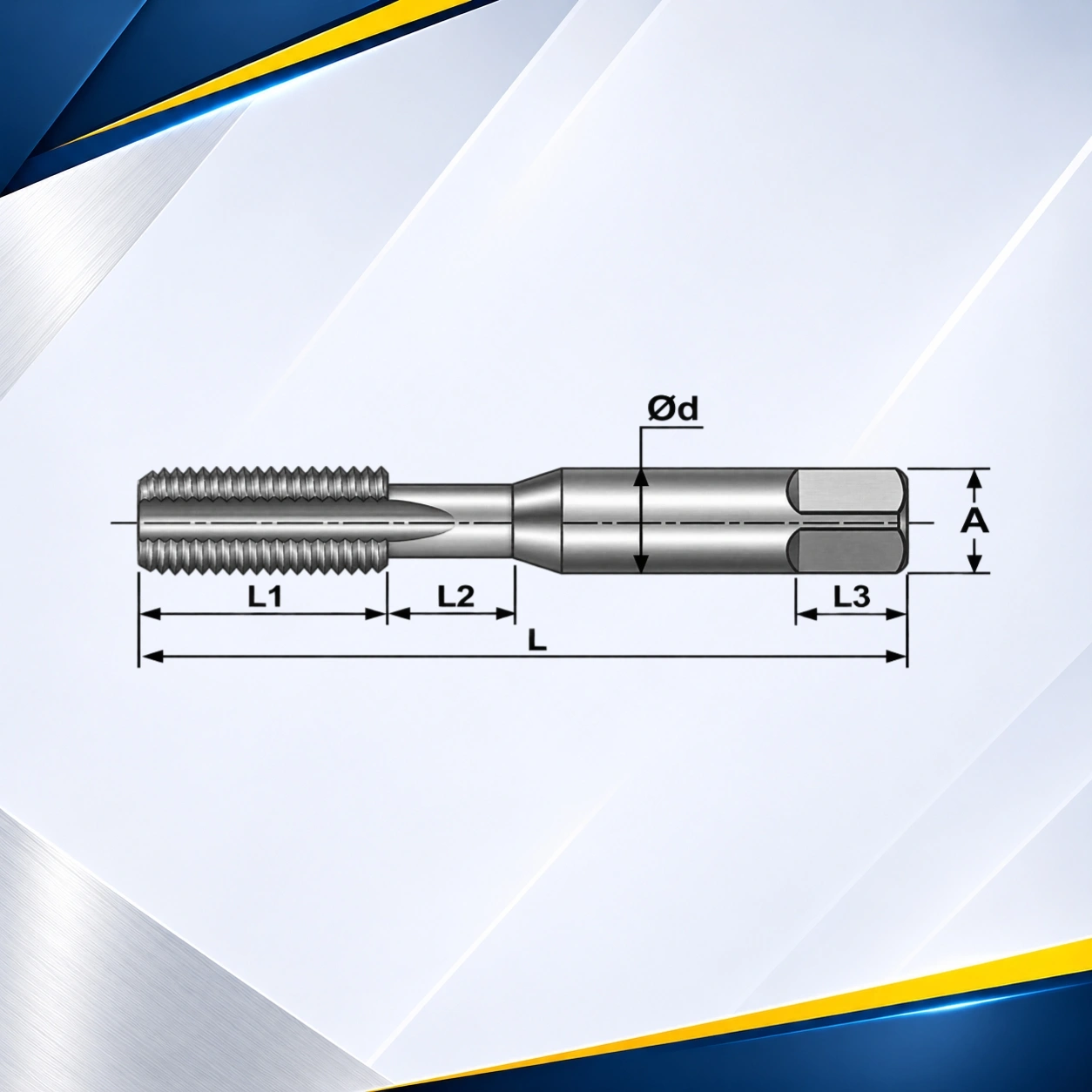
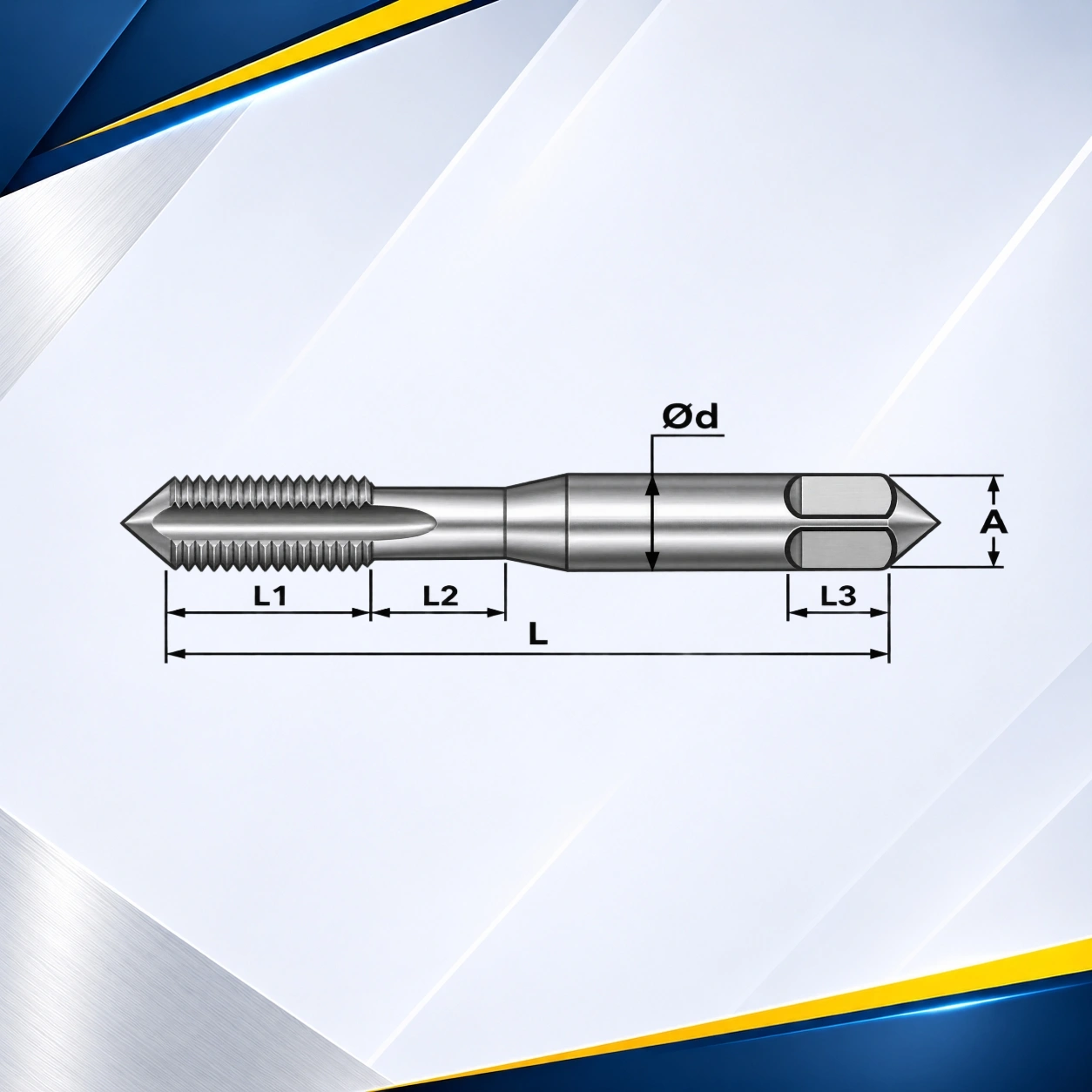
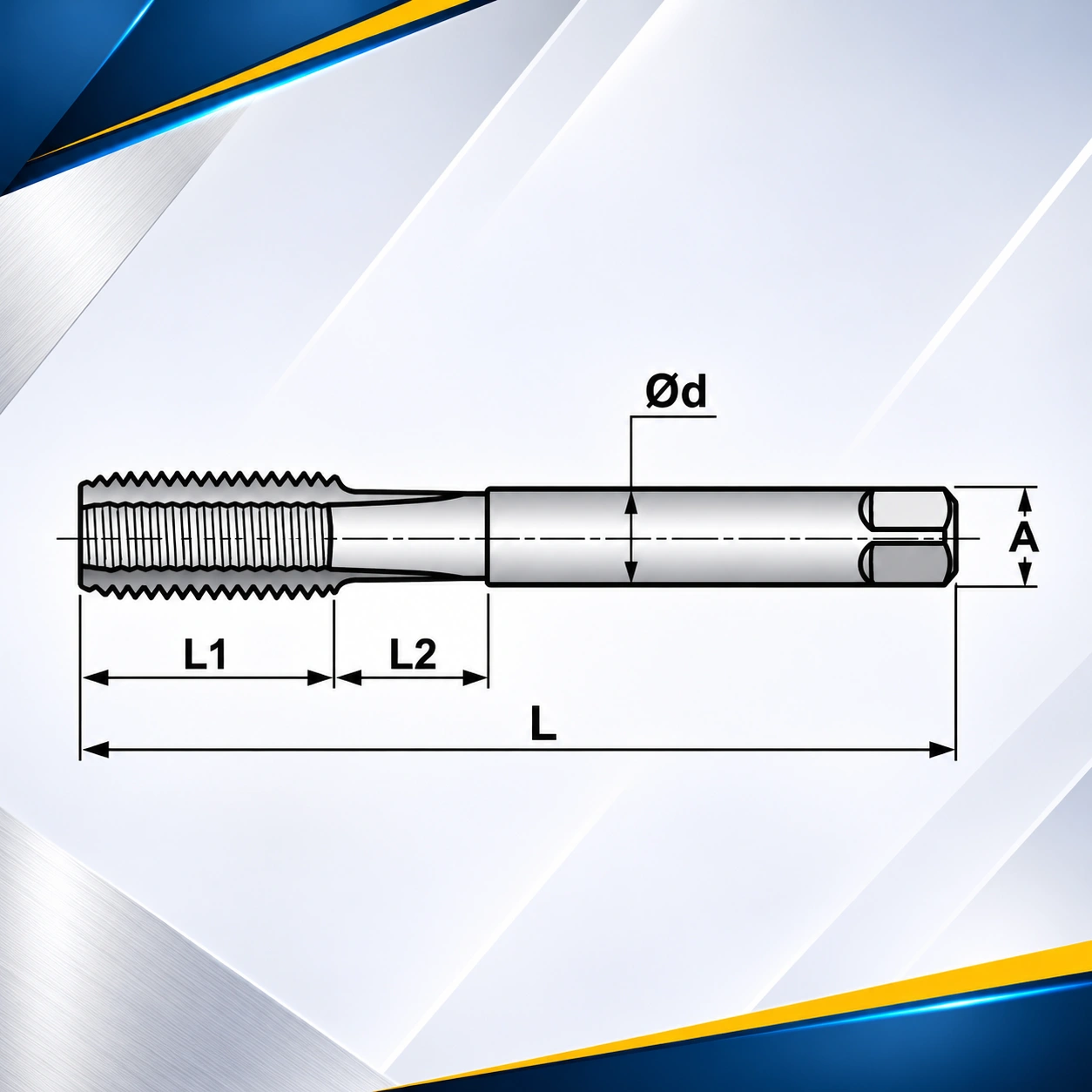
| Nominal Dia | Pitch | Shank Dia MM (d) | Thread Length MM (L1) | Recess Length MM (L2) | Overall Length MM (L) | Square Flat MM (A) | Square Length MM (L3) | Drill Size |
|---|---|---|---|---|---|---|---|---|
| 3 | 0.5 | 3.15 | 12.5 | 5.5 | 48 | 2.5 | 5 | 2.5 |
| 4 | 0.7 | 4 | 14 | 7 | 57 | 3.15 | 6 | 3.3 |
| 5 | 0.8 | 5 | 11 | 11 | 63 | 4 | 7 | 4.2 |
| 6 | 1 | 6.3 | 13 | 13 | 66 | 5 | 8 | 5 |
| 8 | 1.25 | 8 | 16 | 13 | 72 | 6.3 | 9 | 6.8 |
| 10 | 1.5 | 10 | 18 | 16 | 80 | 8 | 11 | 8.5 |
| 12 | 1.75 | 9 | 22 | 12 | 89 | 7.1 | 10 | 10.3 |
| 14 | 2 | 11.2 | 24 | 17 | 95 | 9 | 12 | 12 |
| 16 | 2 | 12.5 | 24 | 13 | 102 | 10 | 13 | 14 |
| 18 | 2.5 | 14 | 29 | 21 | 112 | 11.2 | 14 | 15.5 |
| 20 | 2.5 | 14 | 29 | 21 | 112 | 11.2 | 14 | 17.5 |
No sizes match your search. Try a different diameter or pitch.
All dimensions are nominal and subject to standard manufacturing tolerance. Machine taps based on DIN Standard can be supplied as per requirement.
Hand Taps — Application Details & Tap Selection Guide
Chamfer styles, lead threads and recommended applications.
| Chamfer Style | Lead Threads | Alternative Name | Application | Features |
|---|---|---|---|---|
| Taper Tap | 7–10 Threads | First Tap | Through holes, starting threads by hand | Easy alignment, low cutting load, smooth thread entry |
| Plug Tap | 3–5 Threads | Second Tap | General purpose, through & blind holes | Most commonly used hand tap, balance of strength & cutting efficiency |
| Bottoming Tap | 1–2 Threads | Bottom Tap | Blind holes requiring full thread depth | Produces threads close to the bottom of the hole; used after taper or plug tap |
No data matches your search.
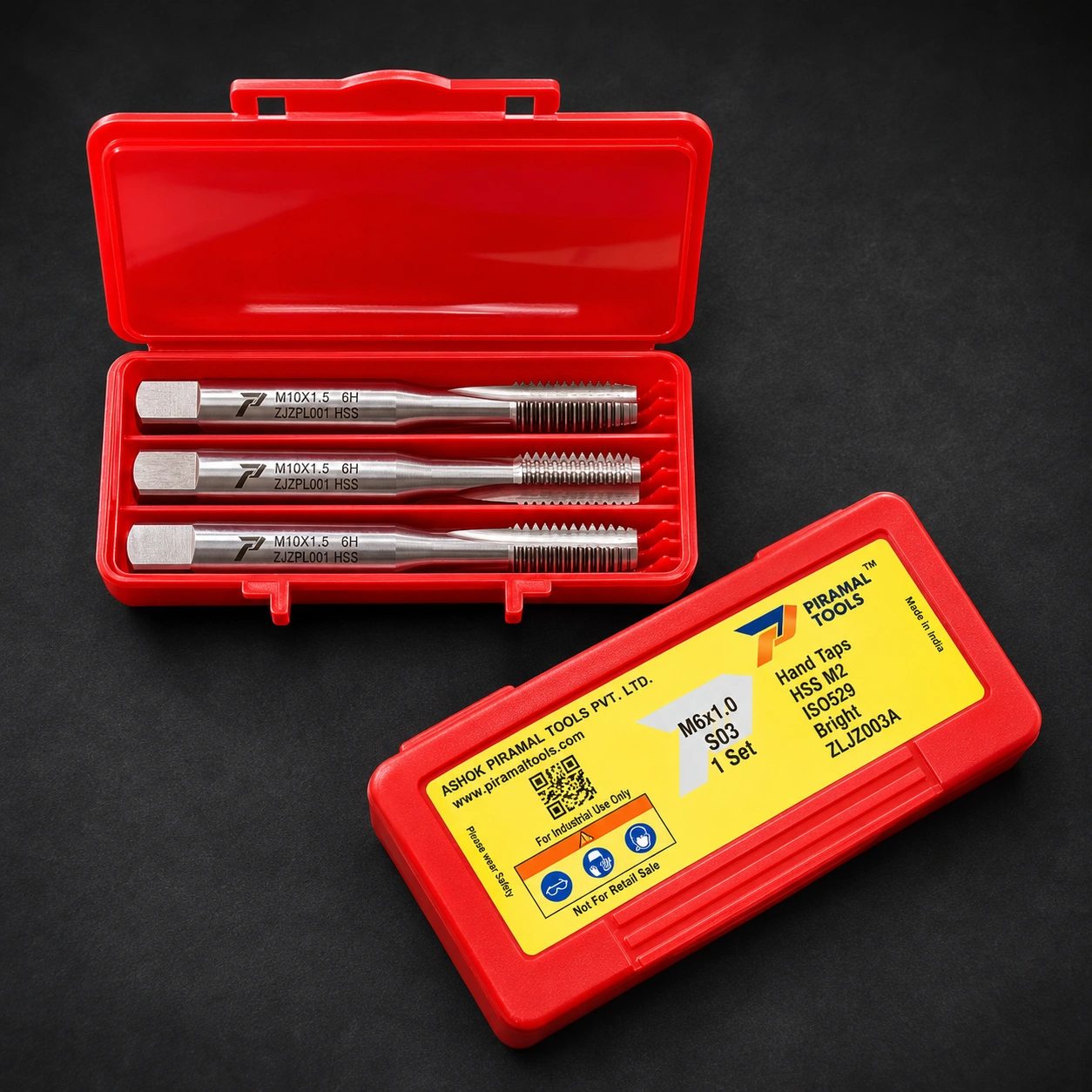
Use all three hand taps (Taper → Plug → Bottoming) when full thread depth is required in blind holes. Never force a tap if resistance increases — withdraw, clean, lubricate, and continue.
APPLICATION DETAILS
- Taper Tap
Used for starting new threads.
Ideal for manual tapping.
Best for through holes.
Long chamfer provides smooth cutting action and accurate alignment. - Plug Tap
Most widely used hand tap.
Suitable for general-purpose threading.
Can be used in both through and blind holes.
Often supplied as the standard single hand tap. - Bottoming Tap
Used where full threads are required close to the bottom of a blind hole.
Should be used only after a taper or plug tap has already started the thread.
Short chamfer increases cutting load but provides maximum thread depth.
HAND TAP PRACTICE & GUIDE
- Select the correct tap type (Taper, Plug, or Bottoming) according to the hole type and application.
- Drill the correct tapping drill size before threading.
- Secure the workpiece firmly to prevent movement during tapping.
- Keep the tap aligned perpendicular to the work surface to ensure accurate threads.
- Apply an appropriate cutting fluid for the workpiece material.
- Rotate the tap smoothly without applying excessive force.
- Reverse the tap approximately ¼ to ½ turn periodically to break chips and reduce cutting resistance.
- Clean chips from the flutes frequently, especially in blind holes.
- Never force a tap if resistance increases—withdraw, clean, lubricate, and continue.
- Use all three hand taps (Taper → Plug → Bottoming) when full thread depth is required in blind holes.
- Inspect the finished thread using the appropriate thread gauge or mating fastener.